

How to Cold Smoke Fish at Home

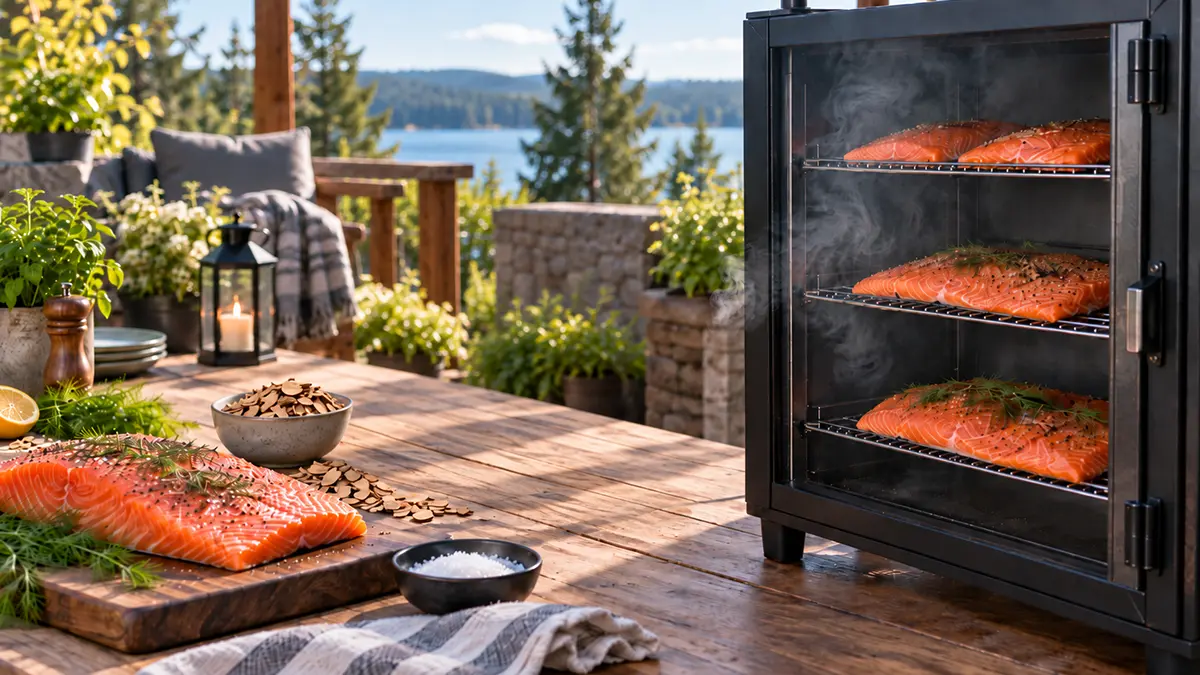
Cold smoking fish at home can produce deep smoke flavour, a firm silky texture and the classic aroma of traditional smoked salmon or trout. But unlike hot smoking, cold smoking does not cook the fish with heat. That means the result depends heavily on preparation, salt, drying, clean handling and careful temperature control.
This beginner guide gives you a practical method for cold smoking fish at home using salmon or trout fillets. It includes a simple dry cure for 1 kg of fish, drying steps for forming a pellicle, suggested smoking time, wood chip choices and safety notes. Use it as a starting point, then adjust salt, smoke time and wood choice after your first sessions.
Quick Method: Cold Smoked Salmon or Trout
| Step | What to do | Typical time |
|---|---|---|
| Prepare fish | Use fresh, clean salmon or trout fillets. Remove pin bones and trim uneven edges. | 10–20 minutes |
| Dry cure | Apply salt and sugar cure evenly over the fish. | 8–12 hours |
| Rinse and dry | Rinse lightly, pat dry and let the surface become tacky. | 2–4 hours |
| Cold smoke | Smoke with mild wood chips and keep the chamber cool. | 4–8 hours |
| Rest | Refrigerate before slicing so the smoke flavour settles. | 6–12 hours |
Important Food Safety Note
Cold smoking fish requires more care than many home cooking methods because the fish is not cooked by high heat. Use fish from a trusted source, keep it chilled during preparation and follow reliable food safety guidance for salting, curing, refrigeration and storage.
If the fish will be eaten as cold-smoked fish without later cooking, parasite control is important. Many users choose fish that has been commercially frozen or sold for raw or cold-smoked preparation. Local food safety rules and supplier information should always be followed.
Cold-smoked fish is not recommended for everyone. Pregnant people, older adults and people with weakened immune systems should be especially careful with refrigerated smoked fish because of Listeria risk. When in doubt, choose a cooked fish preparation instead.
Best Fish for Beginners
For your first cold smoking session, salmon or trout fillets are usually the easiest choice. They have enough fat to carry smoke flavour well, they are easy to salt evenly and they slice nicely after resting.
- Salmon: rich, fatty and classic for cold smoking.
- Trout: slightly lighter, delicate and excellent with mild smoke.
- White fish: possible, but often less forgiving for beginners.
Choose skin-on fillets if possible. The skin helps hold the fish together during curing, drying and smoking. Try to use pieces with even thickness, because thin edges can become too salty or too dry before the thicker centre is ready.
Ingredients for 1 kg of Fish
This is a simple beginner dry cure for salmon or trout fillets. It gives a balanced result without making the fish overly sweet or heavily spiced.
- 1 kg salmon or trout fillet
- 60 g fine sea salt
- 30 g sugar
- 1 teaspoon black pepper, optional
- Fresh dill, optional
- Lemon zest, optional
This is a starting ratio, not a universal rule for every fish. Thicker fillets need more time than thin pieces. Smaller pieces cure faster. After your first batch, adjust curing time rather than adding random extra salt.
Equipment Checklist
- Cold smoking chamber, smoker cabinet, ceramic grill or compatible kamado-style grill
- Cold smoke source or cold smoke generator
- Food-safe wood chips
- Thermometer for the smoking chamber
- Clean racks or hooks
- Tray or container for curing
- Paper towels
- Refrigerator space for curing and resting
The most important equipment detail is control. You need steady smoke, good airflow and a chamber temperature that stays low enough for the cold smoking method you are using.
Step 1: Trim and Check the Fish
Start with a fresh salmon or trout fillet. Remove pin bones with tweezers and trim very thin belly edges if they are much thinner than the rest of the fillet. Thin pieces cure and smoke faster, so keeping the thickness more even helps produce a better result.
Pat the fish dry with clean paper towels. Place it skin-side down in a clean tray or container. Keep the fish cold while you prepare the cure.
Step 2: Apply the Dry Cure
Mix the salt and sugar in a bowl. Add black pepper, dill or lemon zest if you want a more aromatic result. Spread the cure evenly over the flesh side of the fish. Use a little more on thicker parts and less on very thin edges.
Cover the fish and refrigerate it for 8–12 hours. For a thin trout fillet, start closer to 8 hours. For a thicker salmon fillet, 10–12 hours is a better starting point.
During curing, the fish will release liquid and the flesh will become firmer. This is normal. Do not leave fish curing at room temperature.
Step 3: Rinse, Taste and Dry
After curing, rinse the fish lightly under cold water to remove surface salt. Pat it completely dry with paper towels. If you are unsure about saltiness, cut a tiny piece from a thin edge and taste it. It should be seasoned but not harshly salty.
If the fish tastes too salty, soak it briefly in cold water for 10–20 minutes, then dry it again. Do not over-soak, because the goal is to correct excess salt without making the surface watery.
Step 4: Form the Pellicle
Before smoking, the fish needs to dry until the surface becomes slightly tacky. This tacky surface is called a pellicle. It helps smoke stick more evenly to the fish and improves colour, texture and flavour.
Place the fish on a rack in the refrigerator or in a cool, clean and well-ventilated place for 2–4 hours. The surface should no longer look wet. It should feel lightly sticky when touched with a clean finger.
Step 5: Choose Wood Chips for Fish
For fish, start with mild or medium smoke. Strong smoke can overpower salmon or trout, especially during a long cold smoking session.
- Alder: classic mild choice for salmon and trout.
- Apple: light, slightly sweet and beginner-friendly.
- Beech: clean, balanced and versatile.
- Oak: stronger; use carefully and avoid over-smoking.
Use dry wood chips intended for food smoking. Do not use treated, painted, glued, mouldy or unknown wood. Bad wood can ruin the flavour and may produce unsafe smoke.
Step 6: Cold Smoke the Fish
Place the cured and dried fish on clean racks with space between pieces. Smoke should be able to move around the fish, not just hit one side. Avoid overcrowding the chamber.
Start the smoke source and check the airflow. The smoke should be light and steady, not thick and dirty. Heavy smoke can make fish bitter. A clean, thin smoke stream usually gives a better flavour.
For a beginner batch of salmon or trout, start with 4–8 hours of cold smoking. Four hours gives a lighter flavour. Six to eight hours gives a deeper smoke profile. The exact time depends on fish thickness, chamber size, smoke intensity and personal taste.
Cold Smoking Temperature
Keep the smoking chamber cool and monitor it during the whole session. A common cold smoking target is below 30°C / 86°F. Avoid direct heat and avoid smoking in hot weather unless you can keep the chamber temperature under control.
If the chamber gets too warm, stop the session, chill the fish and correct the setup before continuing. Do not guess with fish. Temperature control is part of the process, not an optional detail.
Step 7: Rest Before Slicing
After smoking, wrap or cover the fish and refrigerate it for 6–12 hours before slicing. This resting time helps the smoke flavour settle and gives a more balanced taste.
Slice thinly with a sharp knife. Serve cold-smoked fish with rye bread, cream cheese, dill, lemon, pickled onion, salad or eggs.
Storage
Keep cold-smoked fish refrigerated. For home-prepared cold-smoked fish, it is best to make small batches and eat them within a short time. Do not store it for long periods unless you are following a validated preservation method.
Be especially careful with vacuum packing. Vacuum-packed smoked fish can create additional food safety risks if storage temperature, salt level and processing controls are not correct. For beginners, short refrigerated storage is a safer approach than trying to create a long-life product.
Common Mistakes When Cold Smoking Fish
- Skipping the cure: cold smoking fish without proper salting is not a good beginner method.
- Smoking wet fish: if the surface is wet, smoke sticks unevenly and flavour can become harsh.
- Using too much smoke: thick smoke can make fish bitter instead of aromatic.
- Letting the chamber get too warm: this changes the process and can affect texture and safety.
- Using the wrong wood: treated or unknown wood should never be used for food smoking.
- Overcrowding the smoker: poor airflow gives uneven smoke and inconsistent results.
- Ignoring storage: cold-smoked fish must be chilled and handled carefully after smoking.
Troubleshooting
| Problem | Likely cause | What to change next time |
|---|---|---|
| Fish tastes too salty | Cure time too long or too much cure on thin parts | Reduce curing time or use less cure on thin edges |
| Fish tastes bitter | Smoke too heavy or wood too strong | Use lighter smoke, better airflow and milder wood |
| Uneven colour | Fish too wet or smoker overcrowded | Dry longer and leave more space between pieces |
| Soft texture | Not enough curing or drying | Extend the dry cure slightly and form a better pellicle |
| Too smoky outside, mild inside | Smoke too intense at the start | Use thinner smoke and longer gentle exposure |
Recommended Setup for Controlled Cold Smoking
For beginners, the easiest setup is one that gives steady smoke and predictable airflow. A cold smoke generator helps separate smoke production from direct heat, which makes it easier to keep the smoking chamber cool.
Tiskre-DO cold smoke generators are made in Estonia from stainless steel and aluminium and are designed for controlled cold smoking of fish, meat, cheese and other foods. They can be used with compatible ceramic, metal and kamado-style grills.
You can compare available models in the cold smoke generator category.
Beginner Cold Smoked Fish Formula
For your first batch, keep it simple:
- 1 kg salmon or trout fillet
- 60 g salt
- 30 g sugar
- 8–12 hours curing time
- 2–4 hours drying time
- 4–8 hours cold smoking time
- Mild wood such as alder, apple or beech
- 6–12 hours refrigerated resting time before slicing
After the first session, write down what you used: fish weight, cure time, drying time, wood type, smoking temperature and smoking time. This makes it much easier to improve the next batch instead of guessing.
Final Tips
- Start with salmon or trout before trying more difficult fish.
- Use even fillets so curing and smoking are consistent.
- Do not rush the drying stage; pellicle matters.
- Use mild wood for your first batch.
- Keep smoke light, clean and steady.
- Monitor chamber temperature from start to finish.
- Make small batches until your process is consistent.
Cold smoking fish at home is a skill that improves with careful notes and controlled changes. Start with a simple salmon or trout fillet, keep the process clean and cool, and adjust one variable at a time: cure duration, wood type or smoking time.
Frequently Asked Questions
Can you cold smoke fish at home?
Yes, fish can be cold smoked at home with the right preparation, equipment and temperature control. Because cold smoking does not cook the fish with high heat, salting, drying, refrigeration and safe handling are very important.
What fish is best for cold smoking?
Salmon and trout are good beginner choices because they have enough fat to carry smoke flavour and are easy to cure evenly. Use fresh, high-quality fish from a trusted source.
How much salt do I need for cold smoked fish?
A simple beginner dry cure for 1 kg of salmon or trout is 60 g fine sea salt and 30 g sugar. Cure time should be adjusted depending on fillet thickness and taste.
How long should fish cure before cold smoking?
For salmon or trout fillets, 8–12 hours is a useful starting range. Thin trout fillets may need less time, while thicker salmon fillets may need longer.
Why does fish need to dry before cold smoking?
Drying forms a tacky surface called a pellicle. This helps smoke adhere more evenly and improves colour, flavour and texture.
How long does it take to cold smoke fish?
For a beginner batch of salmon or trout, 4–8 hours is a practical starting range. The final time depends on fish thickness, smoke intensity and desired flavour.
What temperature should I use for cold smoking fish?
Cold smoking should be done at low chamber temperature. A common target is below 30°C / 86°F. Monitor the chamber temperature throughout the session.
What wood chips are best for cold smoking fish?
Alder, apple and beech are good beginner choices for fish. They give a mild to medium smoke flavour without overpowering salmon or trout.
Is cold smoked fish cooked?
No. Cold smoked fish is not cooked in the same way as hot smoked fish. It is exposed to smoke at low temperature, so preparation and food safety controls are essential.
Can I vacuum pack cold smoked fish?
Vacuum packing smoked fish can create additional food safety risks if storage temperature, salt level and processing controls are not correct. Beginners should use short refrigerated storage instead of trying to create a long-life product.
Can I cold smoke fish in a kamado grill?
Yes, a compatible kamado-style grill can be used for cold smoking if the setup allows steady smoke flow and low chamber temperature.
Where can I find cold smoking equipment?
Tiskre-DO offers cold smoke generators for controlled cold smoking in compatible ceramic, metal and kamado-style grills.
[…] fish, the preparation step matters at least as much as the smoke itself. See our detailed guide to cold smoking fish at home for curing, pellicle formation, wood choice and temperature […]