

Cold Smoke Generator Condensation: Causes, Tar & SG2 Filter
Why does a cold smoke generator collect water and sticky tar-like residue? Diagnose condensation, blocked airflow, bitter smoke and SG1 vs SG2 cooler-filter differences.

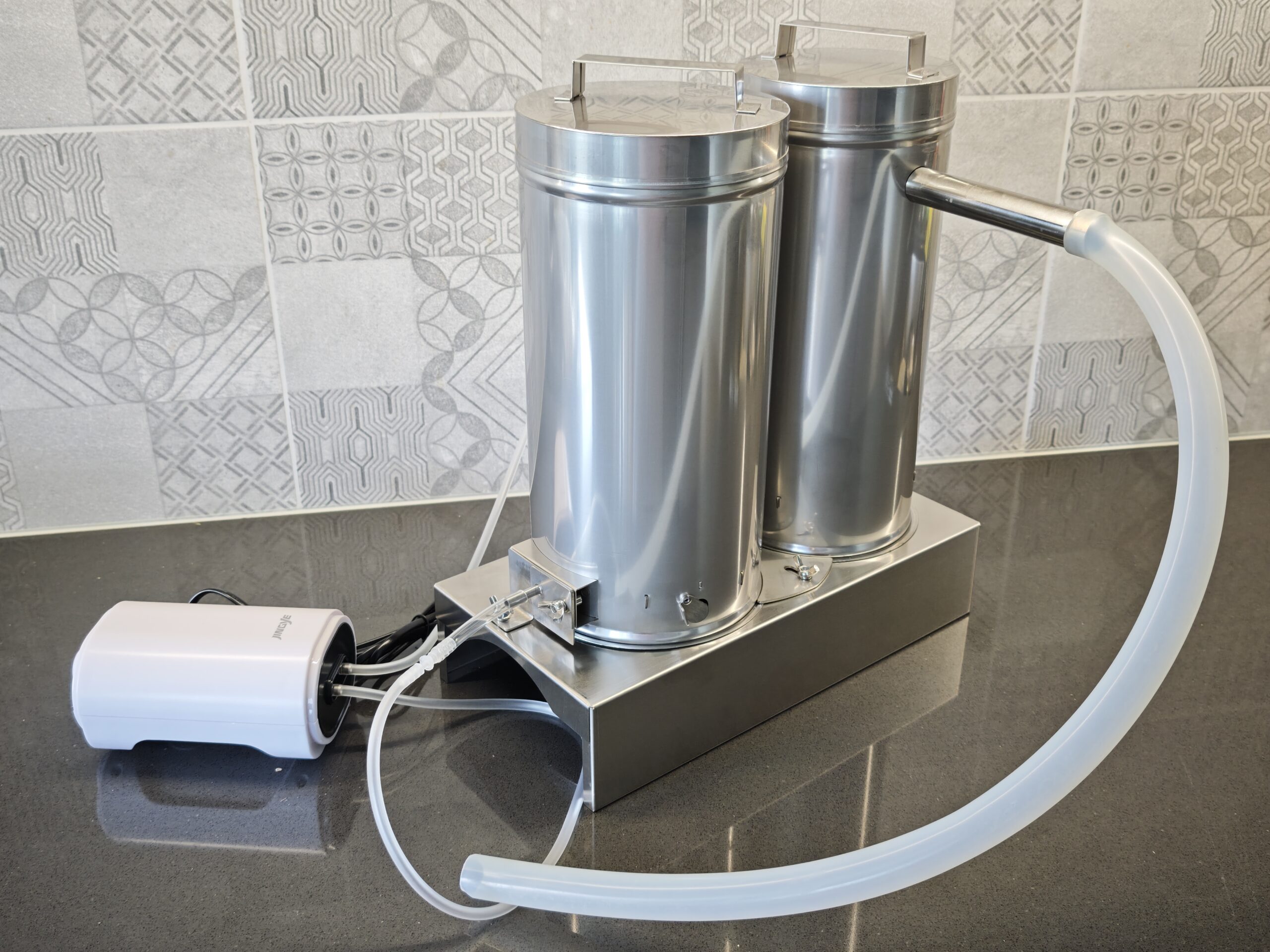
Why does a cold smoke generator produce water, brown droplets or sticky deposits? Smoke contains moisture and a complex mixture of vapours and particles. As it cools inside a tube or smoke cooler, some of those components condense. A small amount of condensate in a collection point can be expected; liquid dripping onto food, a narrowing smoke passage or a persistent harsh smell calls for inspection. The goal is not “zero condensate” but controlled collection, a clear smoke path and reliable cleaning.
Quick diagnosis: if your SG2 glass collection jar contains liquid while smoke still flows evenly, inspect and empty it as required by the manual. If smoke stops, the hose backs up with sticky liquid or droplets reach the food, stop the session, allow the system to cool and check the complete path before restarting. An active cooler-filter is not a food-safety guarantee, and dark residue is not automatically proof that all undesirable smoke compounds have been removed.
1. What is cold-smoke condensate, and why does it form?
Wood-chip smouldering produces a mixture of gas, water vapour, aerosols and organic compounds. When that stream encounters a cooler surface, part of it can turn into droplets or sticky film. A long exposed tube, cold ambient air and changing humidity can all influence where deposits appear. Condensation is therefore a physical effect of cooling smoke, not necessarily a generator defect.
People often describe every brown or black deposit as “tar” or “creosote”. In practice, appearance alone cannot determine the chemical composition or safety of an individual deposit. Dark sticky material should be handled as a residue to remove according to the equipment instructions, not something to taste, reuse as a flavouring or intentionally drip onto food. The US EPA explains the general mechanism of wood-smoke deposits on cooler surfaces; a domestic chimney is not the same apparatus as a food-smoking generator.
2. Where should the liquid go in an external smoke system?
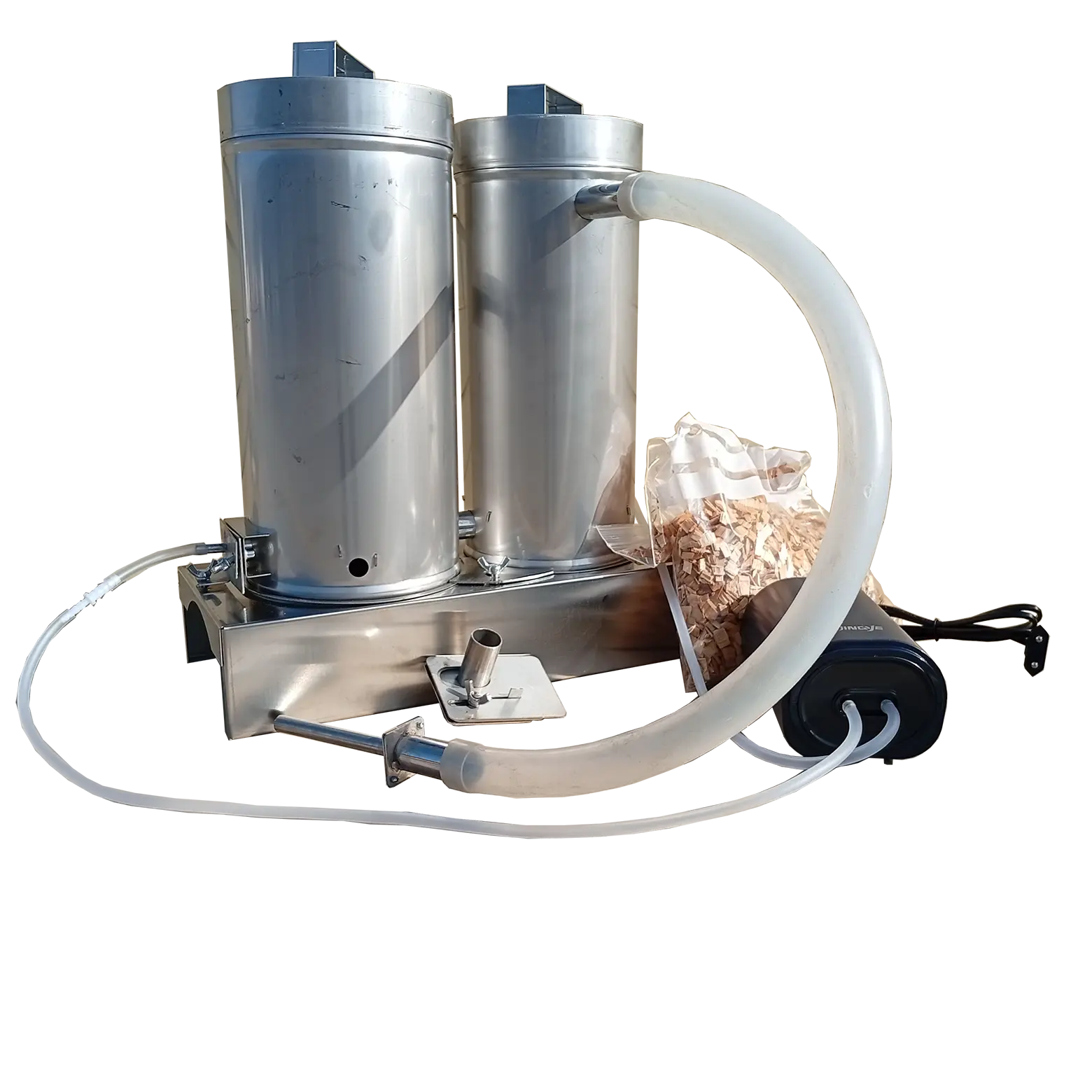
Think of the route as dry 3–8 mm chips → smouldering chamber → cooler / smoke line → suitable smoking chamber → adjustable exhaust. With SG2, the active labyrinth cooler-filter also has a glass collection jar for condensed liquid. The jar makes deposits easier to notice and collect separately instead of allowing them to accumulate invisibly elsewhere. It does not mean the smoke becomes free from all contaminants.
| Location | What to look for | Action |
|---|---|---|
| Chip chamber | Dry chips and stable smouldering; no excessively compacted dust | Use the specified fuel and loading method |
| Cooler and connection | Accessible film or droplets after cooling | Inspect and clean after full cooldown |
| SG2 glass jar | Collected condensate, with no overflow | Check and empty as instructed, after safe shutdown when appropriate |
| Silicone hose and adapter | Clear passage, no kink or pool of liquid | Correct the route and clean according to the manual |
| Cabinet and food racks | No drips from tubes or ceiling onto food | Stop if contamination is suspected; correct the installation |
Do not turn a narrow tube into a liquid trap or make the cabinet airtight. Keep electrical pump components and connections away from liquid and do not make modifications that the manufacturer has not approved.
3. Normal condensation or a problem? Five warning signs
- Some liquid in SG2’s intended collection jar: the system is capturing condensate; monitor the level and follow service instructions.
- Smoke weakens while the pump runs: check for an obstructed passage, packed chips, wet fuel, a folded hose or a connection fault.
- Liquid drips into the food area: stop. Inspect cooler, tube orientation, junctions and chamber surfaces; treat potentially contaminated food conservatively.
- Heavy sticky build-up after repeated sessions: review cleaning frequency, fuel condition, airflow and whether the cooler is accessible for inspection.
- Unexpected heat, a damaged electrical part or strong unusual fumes: shut down and do not resume until the equipment is safe.
There is no reliable universal “safe condensate volume per hour”. The amount varies with fuel, weather, geometry, cooling and running conditions; do not use a jar level as a shortcut for measuring smoke quality.
4. Six things that influence deposits and bitter smoke
| Factor | Mechanism | Practical check |
|---|---|---|
| Wet or inconsistent wood chips | Extra fuel moisture changes ignition and water vapour load | Use dry, clean, untreated 3–8 mm smoking chips |
| Too much fine dust | Compaction reduces predictable air passages | Remove excess fines; fill loosely |
| Restricted airflow | Changes smouldering and may increase deposition | Check pump setting, air inlet, tube and exhaust |
| Overly strong air supply | Can change burn behaviour and create unnecessarily intense smoke | Adjust gradually for stable moderate smoke, not maximum output |
| Long, cold or poorly routed hose | Creates surfaces where vapour can cool and pool | Use a compatible route without kinks or unsafe improvised traps |
| Delayed cleaning | Old deposits collect additional residue and can obstruct passages | Inspect and clean fully cooled parts after use |
Acrid or bitter-tasting food is a reason to review the complete process, not just switch to another wood species. Read our chip-size and wood-selection guide for fuel-specific checks.
5. How SG1 and SG2 manage smoke differently
Both TISKRE-DO generators are made in Estonia from stainless steel and aluminium. Both use a 5.1 L (Ø130 mm) chip container and dry 3–8 mm wood chips, and include a universal adapter, a 0.6 m silicone hose and 1 L of alder chips. Their principal difference here is the smoke-cooling path.
| Technical detail | SG1 | SG2 |
|---|---|---|
| Cooling construction | Passive three-plate smoke cooler | Active five-layer labyrinth cooler-filter |
| Condensate handling | No dedicated glass collection jar | Separate glass condensate collection jar |
| Air system | YE-923 pump | One dual-chamber YE-922 compressor |
| Fuel / capacity | Dry 3–8 mm; 5.1 L | Dry 3–8 mm; 5.1 L |
| Buying consideration | Simpler smoke path and maintenance | Additional cooling/filter stage and visible condensate collection |
Choose SG1 if the simpler passive system suits your tested chamber setup. Consider SG2 if a dedicated condensate collector and additional cooler-filter are valuable. Neither model is a refrigerator, a guaranteed smoke-purification system or a substitute for food-safe smoking practices. For a broader buying decision, use our SG1 vs SG2 comparison.
6. A practical inspection and cleaning sequence
- Stop and cool: end the smoke session following the operating instructions. Disconnect electrical power as specified and let the entire unit cool completely before handling deposits.
- Protect yourself and the work area: use suitable gloves and avoid getting sticky residue on food, skin or clean food-contact surfaces. Do not inhale concentrated smoke or use the device indoors.
- Check the intended condensate container: on SG2 inspect the glass jar for level, damage and correct seating. Empty it as directed by the manufacturer and dispose of the residue appropriately. Do not pour it onto food.
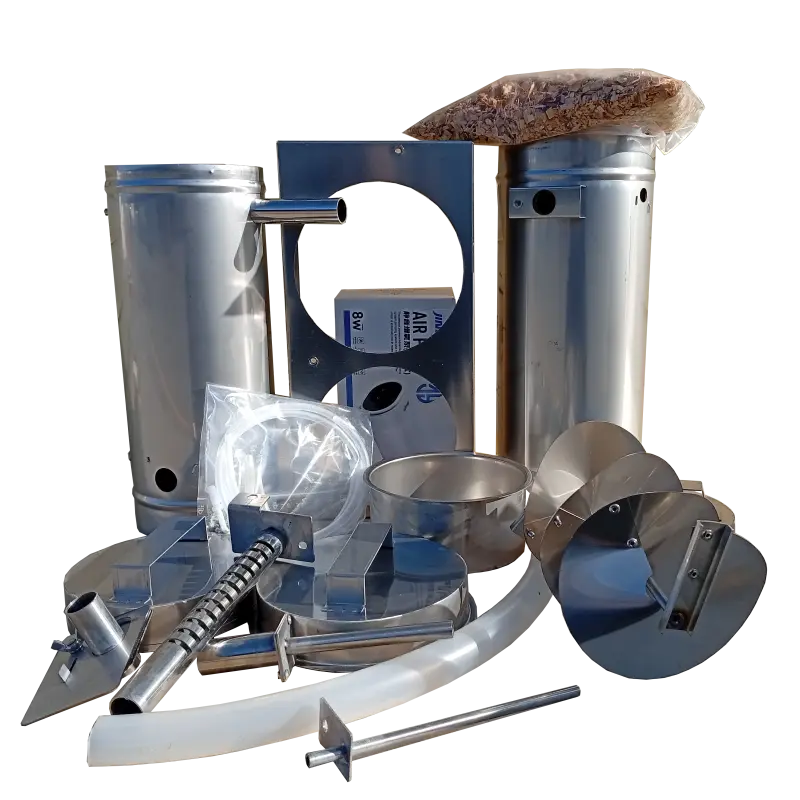
- Inspect each removable smoke-path component: cooler, accessible plates, hose and adapter. Look for build-up, pooling and restricted passage.
- Clean using permitted methods: follow the SG1/SG2 manual for disassembly, cleaning products, drying and reassembly. Do not assume solvents, metal scrapers or pressure-washing are safe for seals, filters or the pump.
- Test before adding food: after reassembly, perform a short empty-chamber run and confirm continuous smoke flow with no leaks, unexpected heat or drips.
For full model-specific assembly, ignition, shutdown and cleaning, follow the SG1/SG2 operating guide. The checklist here helps diagnose condensate, not override the manual.
7. Why a cleaner smoke path does not automatically mean safer food
Smoke composition is complex and cannot be evaluated by colour, smell or condensate quantity alone. Collection of visible liquid does not establish a measured reduction of all hazardous compounds. Neither condensate management nor cold smoking eliminates the need to select suitable raw materials, follow ingredient-specific preparation and monitor food temperature and storage. In particular, cold-smoked fish or meat is not cooked by smoke alone.
If you use a homemade chamber, see the cold-smoking cabinet airflow guide; if you use a ceramic grill, see the Kamado connection guide. Correct venting and prevention of drips matter for both.
Frequently asked questions
Is water in the SG2 glass jar normal?
Condensate collection is an intended function of the jar. The amount varies; service it according to the instructions and investigate abnormal pooling elsewhere.
Is every dark deposit “tar”?
No single visual description identifies its chemical makeup. Treat sticky dark deposits as material to remove from cooled equipment, not an ingredient or quality test.
Can I stop condensate completely?
Not reliably. Cooling smoke can produce condensation. The practical aim is to manage where it collects, keep the smoke passage open and prevent drips onto food.
Will SG2 remove 100% of creosote or harmful substances?
No such performance guarantee is established. Its active cooler-filter and collection jar are real equipment features, but they should not be described as laboratory-certified elimination of all smoke contaminants.
Why does cold-smoked food taste bitter?
Possible factors include very dense smoke, unsuitable or wet chips, poor airflow, excessive exposure and dirty smoke pathways. Correct the cause instead of simply increasing pump output.
Can I use SG1 for a cabinet with no condensate jar?
SG1 is designed with passive cooling and can supply a suitable chamber. Check the full smoke route and cleaning access; choose SG2 if visible condensate collection and additional cooling are priorities.
Want smoke handling designed into the generator? Compare the SG1 passive-cooler generator and the SG2 with active cooler-filter and glass jar, or browse cold-smoking equipment. Check the chamber connection before ordering.