

How to Use a Cold Smoke Generator: SG1 & SG2 Setup, Airflow, Troubleshooting and Cleaning
Learn how to use a cold smoke generator correctly: assemble SG1/SG2, choose and load wood chips, establish a stable smoulder, control airflow and temperature, troubleshoot smoke problems, and clean the system safely.

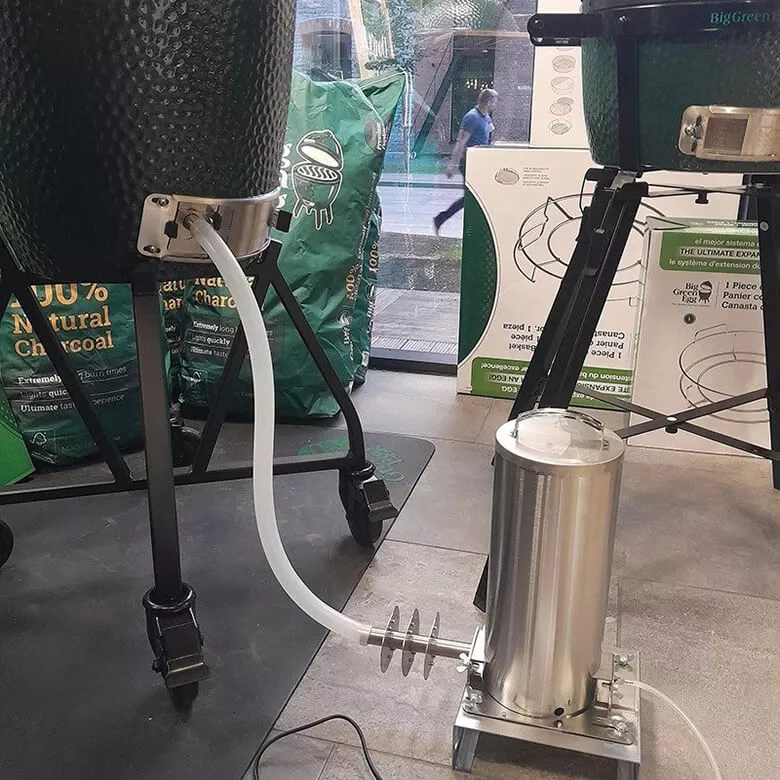
A cold smoke generator is not a miniature smoker and it is not a heater. Its job is to create a controlled flow of smoke while the food chamber stays cool. Getting good results depends on four things: correct assembly, dry food-safe wood fuel, a stable smoulder, and enough airflow for fresh smoke to move through the chamber.
This guide explains how to use the TISKRE-DO SG1 and SG2 cold smoke generators from setup to shutdown. It combines the operating points from the official assembly instructions with the practical details that matter during a real smoking session: how tightly to fill the chip container, how to establish a clean smoulder, how to set airflow, what the cooler is actually doing, how to troubleshoot weak or bitter smoke, and how to clean the system after use.
If you are still deciding between methods, start with Cold Smoking vs Hot Smoking. If you already know you want cold smoke, the steps below are the operating workflow.
Quick answer: how to use a cold smoke generator
- Place the generator outdoors on a stable, level, heat-resistant, non-flammable surface.
- Assemble the SG1 or SG2 exactly as shown in the supplied diagram/video. Make sure caps, burner, cooler, hoses and grill adapter are secure.
- Connect the smoke outlet to an unheated smoking chamber or grill. Leave a clear exhaust path so smoke can move through rather than stagnate.
- Fill the 5.1 L fuel container loosely with dry, food-grade smoking chips. For SG1/SG2, the supplied/recommended chip size is approximately 3-8 mm. Do not compress the chips.
- Connect the air supply. SG1 uses a single air pump; SG2 uses separate air supply for the burner and active cooler-filter.
- Ignite the chips until a self-sustaining smoulder is established. You want glowing combustion and steady smoke, not an open flame. Never use chemical accelerants.
- Adjust airflow for stable smoke. Too little air can extinguish the burn; too much air can make the fuel burn faster and hotter.
- Monitor the smoking chamber with a thermometer. Cold smoking does not cook food. Many cold-smoking processes aim to keep the chamber below about 30°C, but the safe process depends on the food and recipe.
- Check the generator periodically. One full SG1/SG2 load is designed for roughly 5-6 hours, and the container can be refilled for longer sessions when the manufacturer’s handling procedure is followed.
- After smoking, switch off the air supply, allow the generator to cool completely, then empty, clean and dry all parts.
Important: the temperature target above is a process/quality target, not a food-safety guarantee. Cold smoke is not a kill step. Fish and meat require suitable curing, temperature control, hygienic handling and refrigerated storage. If a recipe relies on cold smoking for preservation, use a validated food-safety process rather than smoke exposure alone.
Know which generator you are using: SG1 vs SG2
| Feature | SG1 | SG2 |
|---|---|---|
| Fuel container | 5.1 L, Ø130 mm | 5.1 L, Ø130 mm |
| Cooling | Passive 3-plate cooler | Active 5-layer maze-type cooler-filter |
| Air supply | Single YE-923 air pump | Dual YE-922 compressors: burner + cooler |
| Condensate handling | Passive cooling; simpler path | Active cooler-filter with glass jar to collect tar condensate |
| Typical runtime | About 5-6 hours per chip load | About 5-6 hours per chip load |
| Best fit | Simple, robust home cold-smoking setup | More cooling and condensate separation for users who want a cleaner, more controlled smoke path |
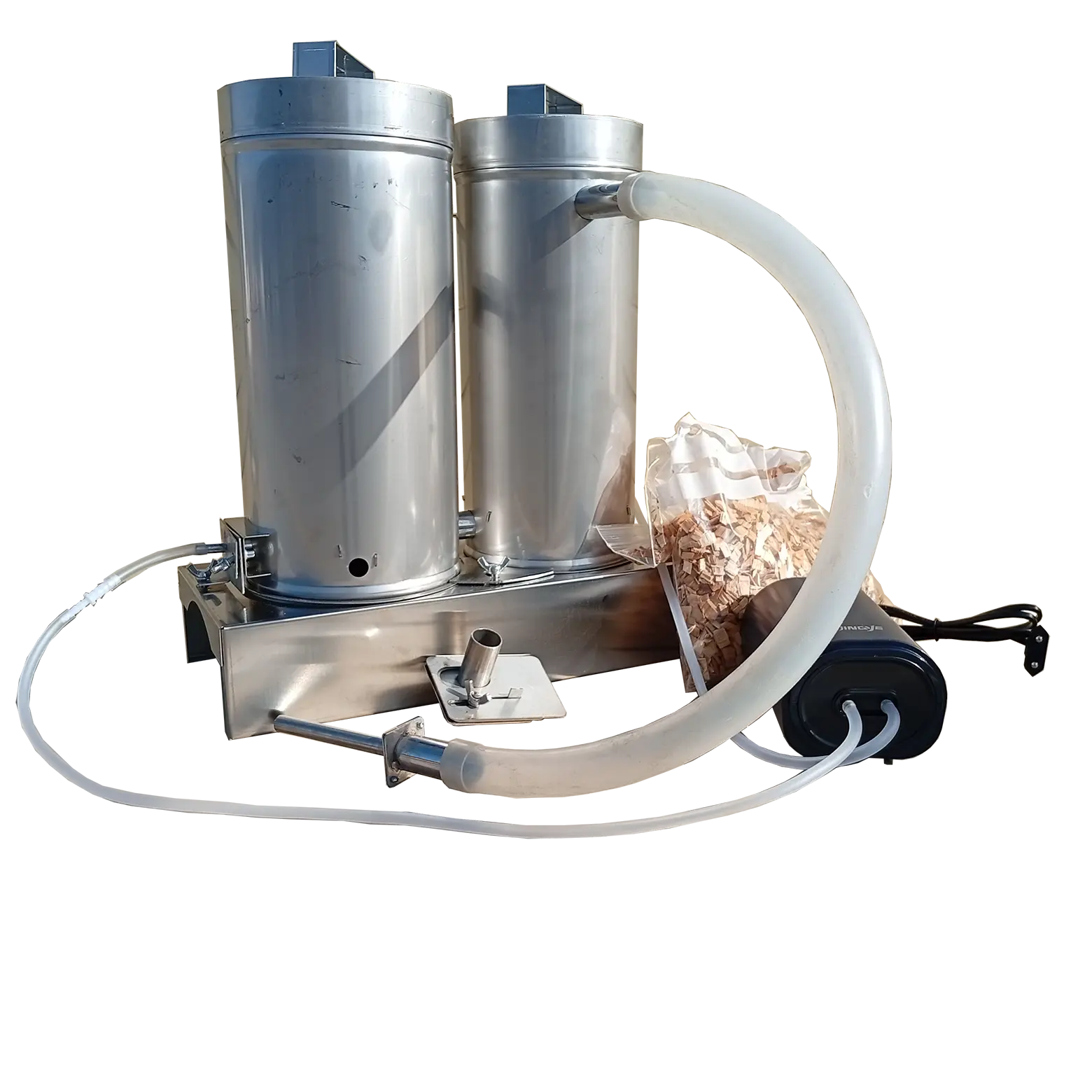
The SG1 is mechanically simpler: smoke leaves the combustion section and passes through a passive three-plate cooler before entering the smoking chamber. The SG2 adds an active five-layer cooler-filter and a separate air circuit. That second system helps lower smoke temperature and separate sticky condensate before the smoke reaches the food chamber.
The SG2 cooler is not refrigeration. It can reduce the temperature of the smoke stream, but it cannot make a warm smoking chamber safely cold on a hot day. Always measure the actual chamber temperature.
1. Set up the smoking area safely
Cold smoking is a long, low-temperature process, but the generator itself still contains a live smouldering fire and its metal parts become hot. Set the system up outdoors in an open, well-ventilated area. Do not operate it in a closed room, garage or other enclosed space where smoke or combustion gases can accumulate.
- Use a stable, level, heat-resistant surface.
- Keep the generator away from wood, cardboard, plastic, dry vegetation, fuel, solvents and other combustible materials.
- Keep children and pets away while the unit is running and while it is cooling.
- Do not touch the metal body, burner, caps or cooler until they have cooled.
- Do not leave the generator unattended while operating.
- Keep the smoke chamber itself clean and made from materials suitable for food smoking.
2. Assemble and connect the generator
The mechanical assembly differs between SG1 and SG2. Do not improvise the order of the internal parts: use the supplied drawing and the official assembly video. The important pre-start check is that the combustion body, cooler, caps, burner/air injector, hoses and grill adapter are fully seated and stable before fuel is loaded.
Official SG1 assembly video
Open the SG1 assembly instructions (PDF).
Official SG2 assembly video
Open the SG2 assembly instructions (PDF).
For the SG2, also confirm that the cooler-filter section and condensate collection jar are correctly installed. The active cooler works as part of the smoke path, so a loose connection can reduce cooling, draw unwanted air or allow smoke to escape before it reaches the chamber.
3. Connect the smoke outlet to the grill or smoking chamber
SG1 and SG2 are designed to work with ceramic and metal grills, including kamado-style cookers (see our kamado cold-smoking setup guide), using the universal adapter and silicone hose. The grill is acting as a smoke chamber, not as a heat source, so burners/charcoal should remain off unless a specific validated recipe explicitly requires otherwise.
A cold-smoking chamber needs an inlet path and an exhaust path. The air pump pushes smoke toward the chamber, but smoke still has to leave. A completely sealed chamber causes stale, heavy smoke, unstable draft and often a harsher flavour. Start with the exhaust vent partially open and adjust from there.
- Smoke barely enters the chamber: check hose kinks, loose fittings, blocked burner passages and whether the exhaust vent is open.
- Smoke leaks at the adapter: reseat the adapter and hose; avoid makeshift seals that can melt or contaminate the smoke path.
- Smoke pours out aggressively: airflow may be excessive, the chips may be flaming instead of smouldering, or the chamber exhaust may be too restricted.
4. Use the right wood chips – and do not pack them
Need to choose a species or chip size? Read our guide to wood chips for cold smoking for alder, beech, dry 3–8 mm chips and practical airflow checks.
A common mistake is following instructions written for maze-style sawdust generators. The TISKRE-DO SG1 and SG2 are chip-fed, air-assisted generators. Use clean, dry wood fuel approved for food smoking and sized for the device. TISKRE-DO supplies alder chips in the roughly 3-8 mm range; older SG-series instructions specify 2-8 mm. In practice, stay with the fuel supplied for the unit or equivalent food-smoking chips in that range.
Do not ram or compress the chips. The spaces between pieces are part of the combustion system. Packing the container too tightly restricts oxygen, makes ignition unreliable and can cause the smoulder to die halfway through a session.
- Use only clean, untreated wood intended for food smoking.
- Do not use painted, glued, pressure-treated or preservative-treated wood.
- Do not use chemical fire starters, lighter fluid or other accelerants.
- Keep chips dry; damp fuel is difficult to ignite and produces unstable smoke.
- Remove excessive fine dust if it blocks the protected air passages.
5. Fill the 5.1 L container correctly
Fill the chip container loosely and evenly. Do not stomp, press or shake the load into a dense mass. The goal is a continuous column of fuel with enough void space for air to move through it. A full container is designed to provide approximately 5-6 hours of operation, although actual burn time changes with wood species, chip size, moisture, airflow and weather.
For very long smoking sessions, the SG-series design allows periodic refilling. Treat refilling as a hot-surface task: wear heat-resistant gloves, keep your face and clothing away from the opening, and follow the handling method shown for your unit. Never assume a metal part is cool just because the smoke output is low.
6. Start the air supply and establish a stable smoulder
Connect the air pump before the smoking session and verify that air is actually reaching the burner. SG1 uses one pump. SG2 has separate air supply for combustion and for the active cooler-filter system.
Ignite the wood at the burner/ignition point and give it enough time to establish a glowing, self-sustaining smoulder. Once the fuel is burning steadily, remove the ignition source. The operating goal is smoulder, not flame. A sustained open flame adds unnecessary heat, consumes the chips too quickly and can produce harsher smoke.
Do not chase maximum smoke volume. Clean cold smoking usually works better with a steady stream of fresh smoke than with a chamber packed with dense white smoke. Aroma quality depends on combustion and ventilation, not on making the smoke as thick as possible.
7. Adjust airflow: the most important control
The air supply has two jobs: it supports combustion and it moves smoke through the system. This is why airflow is the main operational control on an air-assisted generator.
| Symptom | Likely cause | What to change |
|---|---|---|
| Generator keeps going out | Too little air, damp chips, chips packed too tightly, blocked inlet/burner | Confirm pump output and hose, loosen the fuel bed, use dry chips, clean air passages |
| Fuel burns too fast or runs hot | Excessive airflow or an open flame | Reduce airflow and re-establish a controlled smoulder |
| Smoke is heavy and acrid | Poor combustion, stale chamber smoke, dirty cooler/smoke path | Improve exhaust, clean the system, use dry food-grade wood and stable smouldering combustion |
| Very little smoke reaches food | Leak, kinked hose, weak pump, restricted smoke path | Check every connection from burner to chamber and verify exhaust flow |
| SG2 collects excessive sticky condensate or starts restricting flow | Cooler/filter needs service or jar is full | Stop safely, allow to cool, empty and clean the condensate path |
Make one adjustment at a time and wait for the system to stabilise. Constantly changing pump output, vents and fuel position makes it difficult to understand which change improved the burn.
8. Control chamber temperature – not just smoke temperature
The generator cooler reduces heat in the smoke stream, but the food responds to the temperature inside the entire smoking chamber. Put a reliable thermometer at food level. Direct sun, warm ambient weather, a dark metal grill and poor ventilation can raise chamber temperature even when the smoke leaving the generator feels cool.
As a practical definition, cold smoking is commonly kept below about 30°C, and many foods benefit from considerably lower temperatures. Cheese can soften or sweat well before that limit, while fish and meat have food-safety requirements that are not solved simply by staying under a temperature number.
Cold smoking does not cook raw meat or fish. Smoking adds flavour and surface effects; it does not replace curing, parasite controls, safe refrigeration or an appropriate cooking step when one is required. Use recipes and processes designed specifically for the food you are smoking.
9. What should the smoke look and smell like?
Do not judge the process by colour alone, because humidity, wood species and outdoor temperature change the appearance of smoke. Instead, look for a stable flow and a clean wood-smoke aroma. The generator should not be roaring, producing sparks or sending an oily, sooty plume into the chamber.
- Good signs: stable smoulder, consistent airflow, clean woody aroma, no visible flame, chamber temperature stable.
- Warning signs: open flame, rapidly rising chamber temperature, black/sooty deposits, pungent chemical smell, smoke backing up through the burner, or condensate blocking the cooler.
- If in doubt: stop the session, let the unit cool and inspect fuel, air passages, hoses and cooler before restarting.
10. SG1 operating notes
SG1 is the simpler system and is a good choice when you want reliable smoke production with fewer parts to service. Its passive three-plate cooler removes some heat from the smoke path without a second powered cooling circuit.
- Confirm the passive cooler plates are assembled and unobstructed.
- Use the single YE-923 pump to maintain the smoulder and smoke flow.
- Keep the silicone hose free from sharp bends.
- Watch chamber temperature closely in warm weather; passive cooling cannot overcome high ambient heat.
- For longer sessions, refill carefully rather than overpacking the initial load.
See the SG1 cold smoke generator for specifications and included accessories.
11. SG2 operating notes
SG2 adds the active five-layer maze-type cooler-filter and a second air supply. This gives the smoke a longer cooled path and provides a dedicated place for tar/condensate to separate before the smoke enters the food chamber.
- Verify both air circuits are connected correctly before lighting.
- Make sure the cooler-filter insert is seated correctly.
- Keep the condensate collection jar installed and check it during long sessions.
- Do not allow tar buildup to narrow the smoke path; restricted flow affects both combustion and smoke quality.
- Remember that active smoke cooling does not refrigerate the grill or cabinet.
See the SG2 cold smoke generator with active cooler-filter for specifications and included accessories.
12. Shutdown and cleaning
At the end of the session, stop the air supply and make sure combustion is fully extinguished. Do not disassemble or move the generator until all metal components are cool. Tar and smoke condensate are sticky, so the manufacturer recommends protective rubber gloves during cleaning.
- Allow the generator, burner, caps and cooler to cool completely.
- Remove ash and unburned fuel.
- Disassemble the smoke path according to the manual.
- Clean tar/condensate from the cooler, hoses/adapters as appropriate, and the SG2 collection jar.
- Clean blocked air holes and burner passages so the next session receives consistent airflow.
- Follow the safety instructions for any cleaning product used.
- Dry every component completely before reassembly or storage.
Cleaning after every use is not cosmetic. Tar buildup changes internal resistance, reduces airflow, traps stale condensate and makes the next burn harder to control.
Troubleshooting: why a cold smoke generator goes out
The chips ignite, then stop after a few minutes
Check three things first: moisture, packing density and airflow. Use dry chips, refill the container without compressing them, then confirm the pump is delivering air through an unkinked hose. A dirty burner or blocked air inlet can mimic a weak pump.
The generator produces too much heat
Look for an open flame or excessive airflow. The fuel should smoulder. Reduce the air input gradually and confirm the cooler is correctly installed and clean. Also measure the smoking chamber itself: warm weather or direct sun can be the dominant heat source.
The smoke tastes bitter
Bitter flavour usually points to combustion or ventilation, not a need for more wood. Avoid stale, trapped smoke. Make sure the chamber can exhaust, use clean dry wood, keep the smoke path clean and avoid a fuel bed that is starved of oxygen.
Condensation is forming in the hose or cooler
Some condensation is normal as warm smoke cools. Excessive liquid can restrict flow. Keep the generator level, service the SG2 collection jar, clean cooler surfaces and avoid low spots in the hose where liquid can pool.
Best first smoking projects
If you are new to cold smoking, start with a lower-risk product where you can learn airflow and smoke intensity without confusing smoking with cooking. Cheese, salt and nuts are useful practice projects. Fish and meat require more rigorous preparation and food-safety controls.
For fish, use a dedicated curing and cold-smoking process rather than improvising. Your smoke generator provides smoke; it does not make an unsafe raw product safe.
Frequently asked questions
How long does the TISKRE-DO SG1 or SG2 run on one fill?
Both models are designed for roughly 5-6 hours of smoke production from one load of chips. Actual runtime varies with chip size, moisture, wood type, airflow and environmental conditions.
What size wood chips should I use?
Use the chip size supplied/recommended for your specific unit. TISKRE-DO product specifications supply alder chips in the 3-8 mm range; older SG-series operating instructions specify 2-8 mm. The key is dry, clean food-smoking wood with enough space between chips for airflow.
Can I use pellets or sawdust?
Do not substitute fuel simply because another cold-smoke generator uses it. Maze trays often use fine sawdust, while SG1/SG2 are chip-fed air-assisted generators. Use only fuel approved in the instructions supplied with your unit.
Should the smoking chamber be completely sealed?
No. Smoke needs a controlled exit. A sealed chamber can starve the system of useful airflow and trap stale smoke. Maintain an exhaust path and adjust it together with pump airflow.
Can SG2 cold-smoke safely in hot summer weather?
The active cooler can reduce smoke temperature, but it cannot overcome a smoking chamber that is already too warm. Measure chamber temperature at food level and postpone the session if the environment cannot stay within the limits required by your recipe.
Does cold smoking cook the food?
No. Cold smoking is primarily a flavouring and processing step at low temperature. Raw fish and meat still need the correct curing, hygienic handling, refrigeration and any required cooking or validated preservation process.
How often should I clean the generator?
Clean the smoke path after each use, especially where tar and condensate collect. Regular cleaning is one of the best ways to keep airflow, ignition and smoke quality consistent.
Choose the setup that matches your smoking style
For a simple, robust setup, choose the SG1 with passive cooler. For additional smoke cooling and condensate separation, choose the SG2 with active cooler-filter. You can compare all options in Cold Smoke Generators & Smoking Equipment.
Whichever model you use, the repeatable formula is the same: dry food-safe wood, a loose fuel bed, controlled smouldering combustion, steady airflow, an open smoke path, measured chamber temperature and thorough cleaning after the session.
[…] Use dry 3–8 mm wood chips, fill the container without compacting the chips tightly, ignite until stable smouldering is established, then adjust airflow gradually. For a detailed startup and cleaning procedure, see How to Use a Cold Smoke Generator. […]